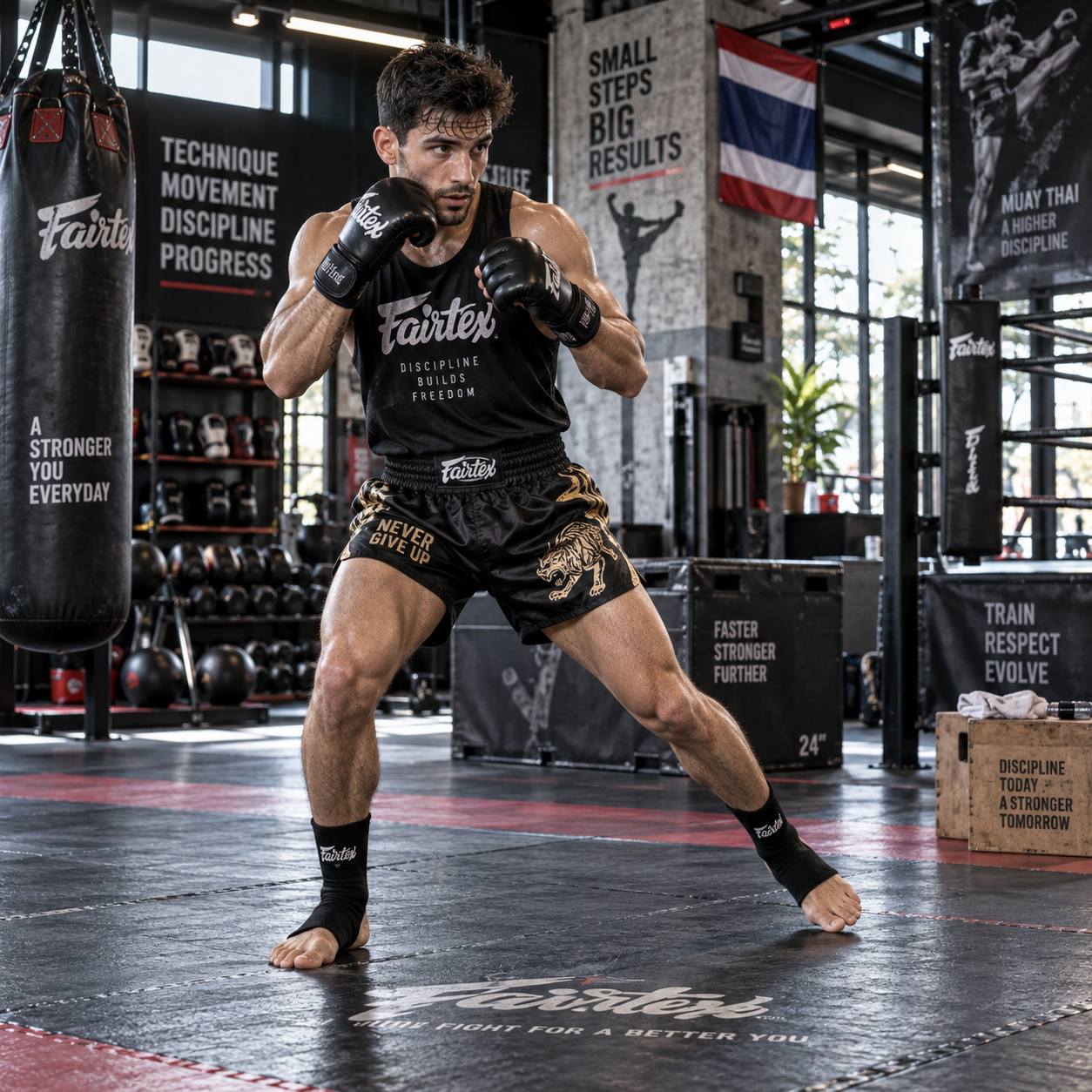


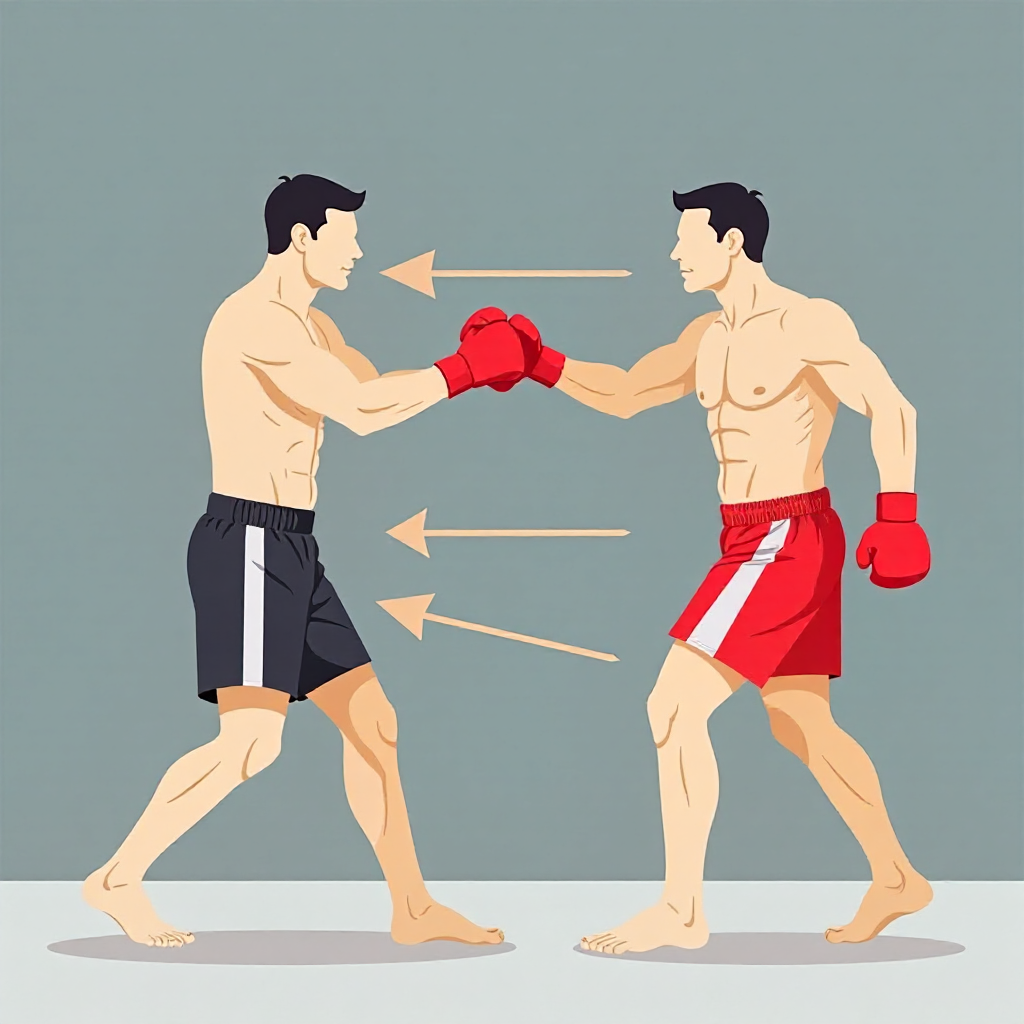
The Mental Benefits of Practicing Martial Arts: How Training Transforms Your Mind
Most people walk into their first kickboxing class or Brazilian Jiu-Jitsu session thinking about fitness. They leave thinking about something else entirely. There's a shift that happens on the mat — subtle at first, then impossible to ignore — where the training stops being about your body and starts reshaping how your mind works.
That shift is what this article is about.
Why Martial Arts Is as Much a Mental Practice as a Physical One
Martial arts is fundamentally a mental discipline that happens to require a physical body. Unlike lifting weights or running, where your mind can wander freely, martial arts demands that you show up mentally — every round, every drill, every roll.
The physical demands are real, but they serve a deeper function. When you're learning to defend a rear naked choke in BJJ or time a roundhouse kick in kickboxing, your brain has no bandwidth left for work stress, social anxiety, or whatever else was consuming you at 6pm. That forced presence is the foundation of every psychological benefit that follows.
What separates martial arts from general gym training is the layered structure of mental challenge. There's technique to memorize, timing to develop, an opponent's intentions to read, and your own reactions to manage — all simultaneously. Neuroscientists describe this kind of complex, adaptive learning as one of the most effective ways to build cognitive resilience and emotional regulation capacity.
Stress Relief and Emotional Regulation Through Training
Martial arts is one of the most effective forms of stress relief available because it combines intense physical exertion with controlled breathing and total mental absorption — a combination that actively lowers cortisol levels and resets your nervous system.
The mechanism isn't complicated. Hard physical effort burns through the stress hormones your body produces during a difficult day. Kickboxing is particularly effective here — three rounds on the heavy bag or pads will discharge accumulated tension in a way that a 30-minute jog rarely matches, partly because of the rhythmic, full-body nature of the strikes and partly because it requires genuine focus.
Breathing plays a central role that often goes unmentioned. Martial arts instructors teach breath control as a technical skill — exhaling sharply on impact, recovering between exchanges, staying composed under pressure. Practiced consistently, this trains the parasympathetic nervous system to respond more efficiently to stress triggers outside the gym.
The result most practitioners report isn't just feeling calmer after training. Over weeks and months, they find they're less reactive in daily life — slower to anger, quicker to recover from frustration, more capable of sitting with discomfort without escalating it.
Building Confidence and Self-Esteem on and off the Mat
Confidence built through martial arts is earned confidence — not the kind that comes from positive affirmations, but the kind that comes from proving to yourself that you can do something genuinely difficult.
The first time you successfully execute a technique you've been drilling for weeks, something changes. It's a small proof of competence, but it compounds. Land a clean combination in kickboxing, survive your first live roll in BJJ, earn your first stripe on your white belt — each milestone creates what psychologists call a mastery experience, which is one of the most reliable drivers of lasting self-esteem.
This carries over into everyday situations in ways that surprise new practitioners. People who struggled with assertiveness in professional settings report finding it easier to hold their ground after months of training. The logic is straightforward: if you've learned to stay calm when someone is actively trying to submit you, a difficult conversation at work feels considerably less threatening.
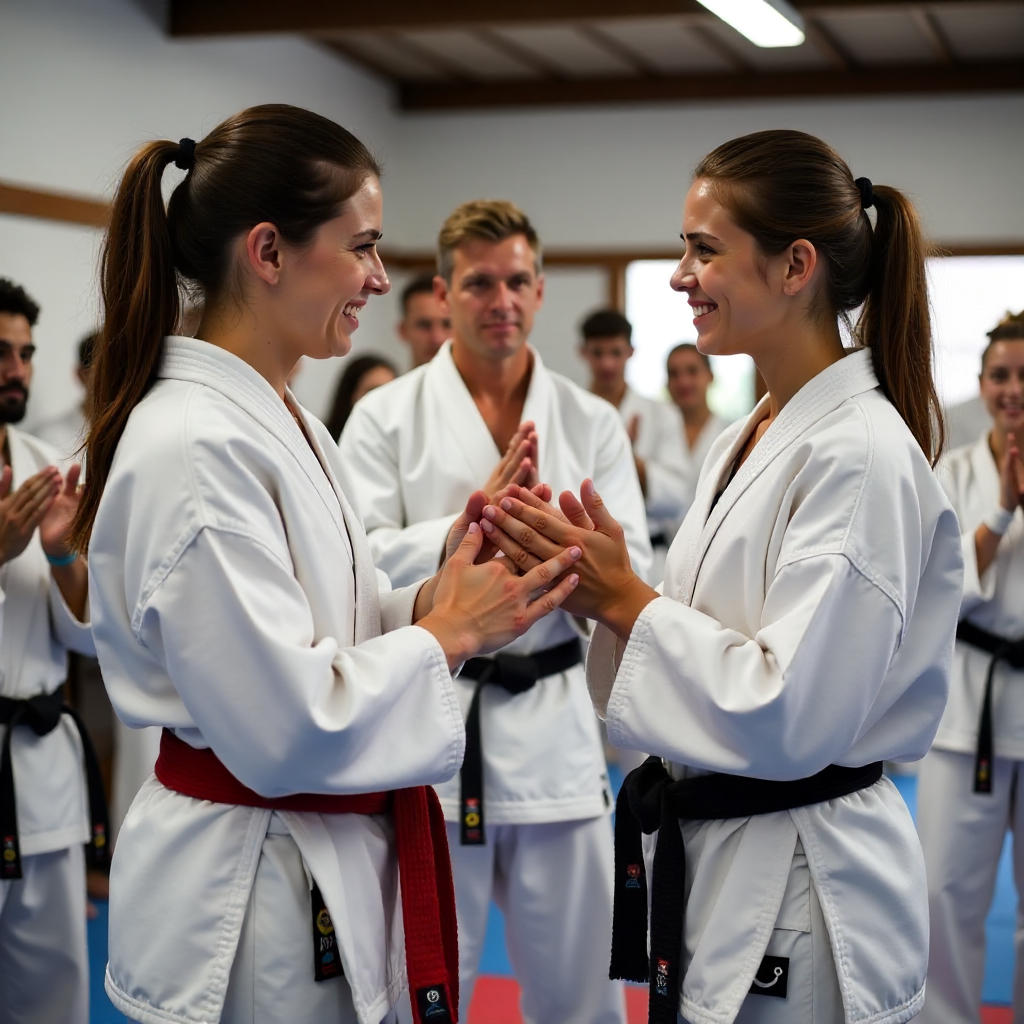
The physical component matters too. Feeling capable in your own body — stronger, more coordinated, more aware of how you move — shifts how you carry yourself. That's not vanity. It's the feedback loop between physical competence and psychological security working as it should.
Sharpening Focus and Developing a Mindful Mindset
Martial arts trains present-moment awareness more effectively than most formal mindfulness practices, because the consequences of distraction are immediate and tangible. You get swept, you miss the combination, you leave an opening — the mat provides honest, instant feedback.
This is the core of the mindfulness benefit: not that martial arts teaches you to meditate, but that it creates conditions where your attention has to stay anchored in the present. There's no room for rumination when you're sparring. Your nervous system learns, through repetition, what genuine focus feels like — and gradually that state becomes more accessible outside the gym.
Practitioners who train consistently often describe a quieting of mental noise over time. The internal chatter that drives anxiety — replaying conversations, catastrophizing future events — loses some of its grip. This isn't a mystical claim. It reflects what happens when the brain regularly practices redirecting attention away from abstract worry and back to immediate sensory experience.
Discipline, Consistency, and the Psychology of Long-Term Goals
The structured nature of martial arts training — belt progressions, drilling sequences, incremental skill development — builds mental discipline in a way that open-ended fitness routines rarely do. Discipline in martial arts is taught through the system itself, not just through willpower.
Belt progression in BJJ is a useful example. The journey from white to blue belt typically takes two to three years of consistent training. There are no shortcuts, no cramming sessions. The only path forward is showing up regularly, drilling fundamentals, and accepting that progress is slow and non-linear. That's an extended lesson in delayed gratification — and it transfers.
People who stick with martial arts long enough develop a different relationship with difficulty. They stop expecting fast results. They learn to find satisfaction in the process rather than only in outcomes. Psychologists studying resilience would recognize this as one of its core components: the ability to persist through frustration without abandoning the goal.
The repetition of drilling — doing the same technique hundreds of times — also builds a tolerance for monotony that has practical value. Most meaningful achievements in life require doing unglamorous things consistently. Martial arts is one of the few activities that actively trains this capacity.
How Martial Arts Helps Combat Anxiety and Low Mood
Regular martial arts training provides a structured, physical outlet for anxiety and low mood that works through several overlapping mechanisms — not just exercise, but community, purpose, and mastery combined.
The exercise component alone is significant. Physical activity increases endorphin and serotonin production, which are directly linked to mood regulation. But martial arts adds layers that generic exercise doesn't. The structure of a class — warm-up, drilling, sparring or pad work, cool-down — provides a reliable routine that people with anxiety often find grounding. Knowing exactly what to expect for 60 minutes can be stabilizing when the rest of life feels unpredictable.
It's worth being clear: martial arts is not a clinical treatment for anxiety disorders or depression, and it shouldn't be positioned as a replacement for professional support. But as a complementary practice, the evidence is consistent. Research published through sources like the National Institutes of Health supports the role of martial arts in reducing anxiety symptoms and improving psychological wellbeing across age groups.
For many practitioners, the gym becomes a space where the usual social pressures don't apply. You're all struggling with the same techniques. Status on the mat is earned through effort, not background or social skill. That leveling effect is quietly powerful for people who feel anxious in conventional social environments.
The Role of Community and Belonging in Mental Wellbeing
The social dimension of martial arts — training alongside the same people week after week, sharing the experience of difficulty — creates a sense of belonging that contributes directly to mental health. This is one of the most underrated benefits of training in a gym or dojo.
Human beings are wired for shared challenge. There's a particular kind of bond that forms when you've been put in uncomfortable positions with someone and worked through it together. BJJ training partners develop a specific trust that's hard to replicate in other social contexts. Kickboxing classes build camaraderie through the shared suffering of a hard session. These aren't trivial social connections — they're the kind that tend to stick.
Accountability within the gym community is another underappreciated mechanism. When your training partners notice if you don't show up, attendance becomes about more than personal motivation. That external accountability structure helps people maintain consistency during periods when internal motivation dips — which is exactly when the mental health benefits are most needed.
Good instructors also play a mentorship role that extends beyond technique. The relationship between a student and a long-term coach involves trust, honest feedback, and encouragement through setbacks. For many adults, that kind of mentorship relationship is rare and genuinely valuable.
Frequently Asked Questions
Can martial arts help with anxiety or depression?
Yes, regular martial arts training can support anxiety and depression management through physical exertion, structured routine, community, and mastery experiences. It's not a clinical treatment, but it functions as a meaningful complementary practice for many people.
How long does it take to notice mental benefits from martial arts?
Most practitioners notice improved mood and reduced stress within the first few weeks of consistent training. Deeper changes — greater confidence, emotional regulation, and mental resilience — typically develop over three to six months of regular practice.
Is kickboxing good for mental health specifically?
Kickboxing is particularly effective for stress relief and mood improvement because of its high-intensity, full-body nature. The combination of rhythmic striking, controlled breathing, and total focus makes it one of the more efficient ways to discharge stress hormones and reset mental state after a difficult day.
Do I need to spar to get the mental benefits of martial arts?
No. Drilling, pad work, bag work, and technical practice all deliver significant mental benefits. Sparring adds an additional layer — particularly for developing composure under pressure — but it's not a prerequisite, especially for beginners.
Can children benefit mentally from practicing martial arts?
Yes, significantly. Children who train martial arts consistently show improvements in focus, impulse control, self-esteem, and social confidence. The structured environment and clear progression system are particularly well-suited to developing discipline and emotional regulation in younger practitioners.