How to Increase Your Punching Power: A Step-by-Step Guide
Every fighter wants to hit harder. But chasing raw power without understanding what actually creates it leads to frustration, plateaus, and sometimes injury. The good news: punching power is a trainable skill, and it responds to the right combination of mechanics, explosiveness, and purposeful drilling.
Why Punching Power Isn't Just About Muscle Size
Punching power comes primarily from technique, timing, and body mechanics — not bicep size. A 180-pound fighter with sharp hip rotation and a connected kinetic chain will consistently outpunch a heavier, stronger opponent who throws with their arm alone.
This is one of the most misunderstood concepts in combat sports. New fighters often spend months in the weight room expecting to magically hit harder, only to find their punches still lack snap. The reason is simple: punching is a full-body skill, and the muscles most responsible for force production — the legs, hips, and core — rarely get trained specifically for punching.
Speed also plays a critical role. Force equals mass times acceleration, and in combat sports, acceleration is the variable you can develop fastest. Fast-twitch muscle fibers, not slow grinding strength, are what produce that explosive snap at the moment of impact. Training those fibers requires a different approach than traditional gym work.
Master the Kinetic Chain: The Foundation of Hard Punches
The kinetic chain is the sequence through which power travels from the ground up to your fist. When every link in that chain is connected and timed correctly, force multiplies. When one link breaks, power bleeds out.
Here's how the chain works for a right cross:
- Feet push into the floor, creating ground reaction force
- Legs drive that force upward through the knees and hips
- Hip rotation transfers and amplifies the force into the torso
- Core stabilizes and channels the rotation toward the shoulder
- Shoulder extends, and the fist snaps through the target
Most fighters who feel "weak" are actually breaking the chain somewhere in the middle — usually by not rotating the hips or by tensing the shoulder before impact. A punch that starts from a solid stance and travels through a connected body feels completely different from an arm punch. It lands with a thud rather than a slap.
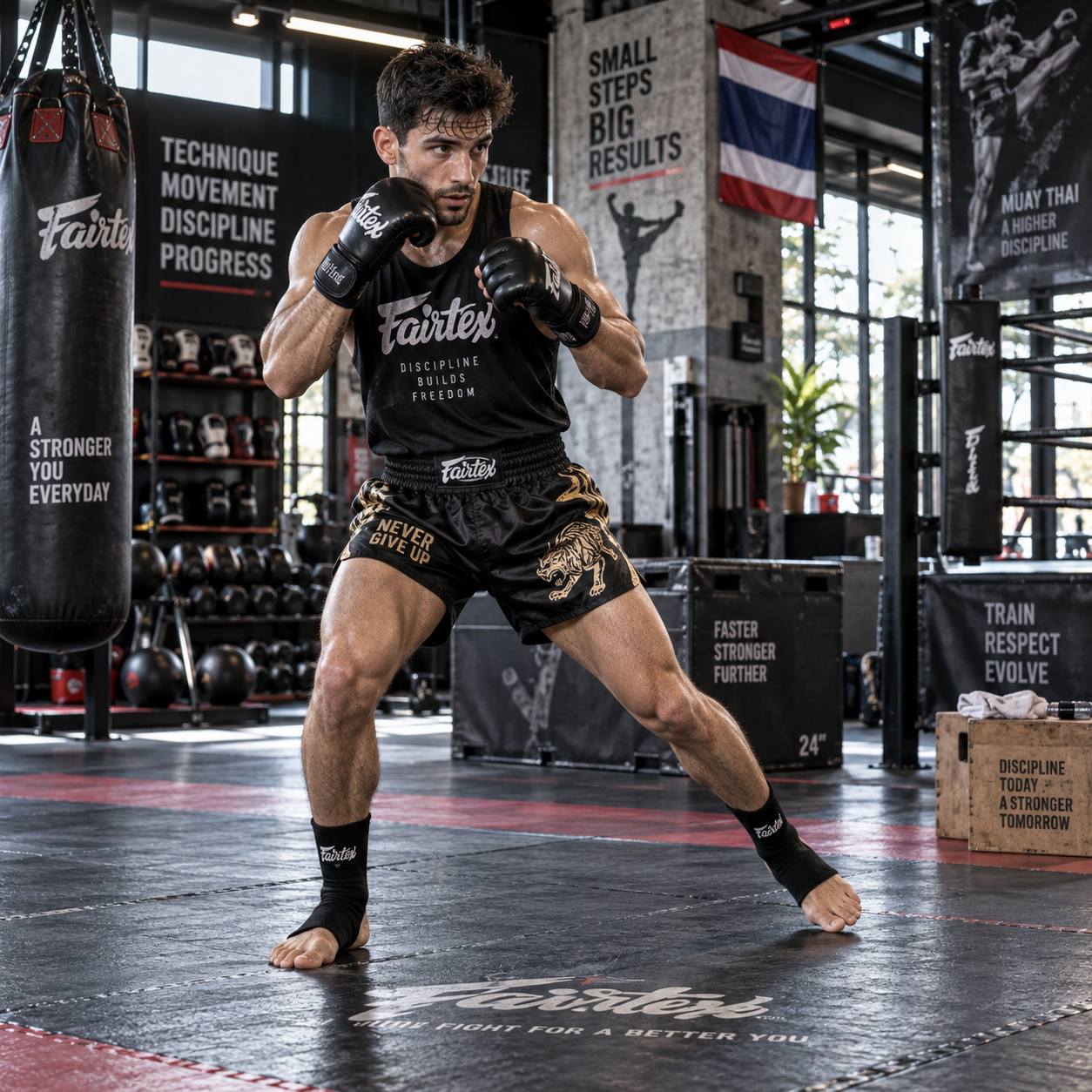
Practice the chain in isolation first. Stand in front of a mirror and throw slow crosses, consciously feeling each segment activate in sequence. Only add speed once the sequence feels automatic.
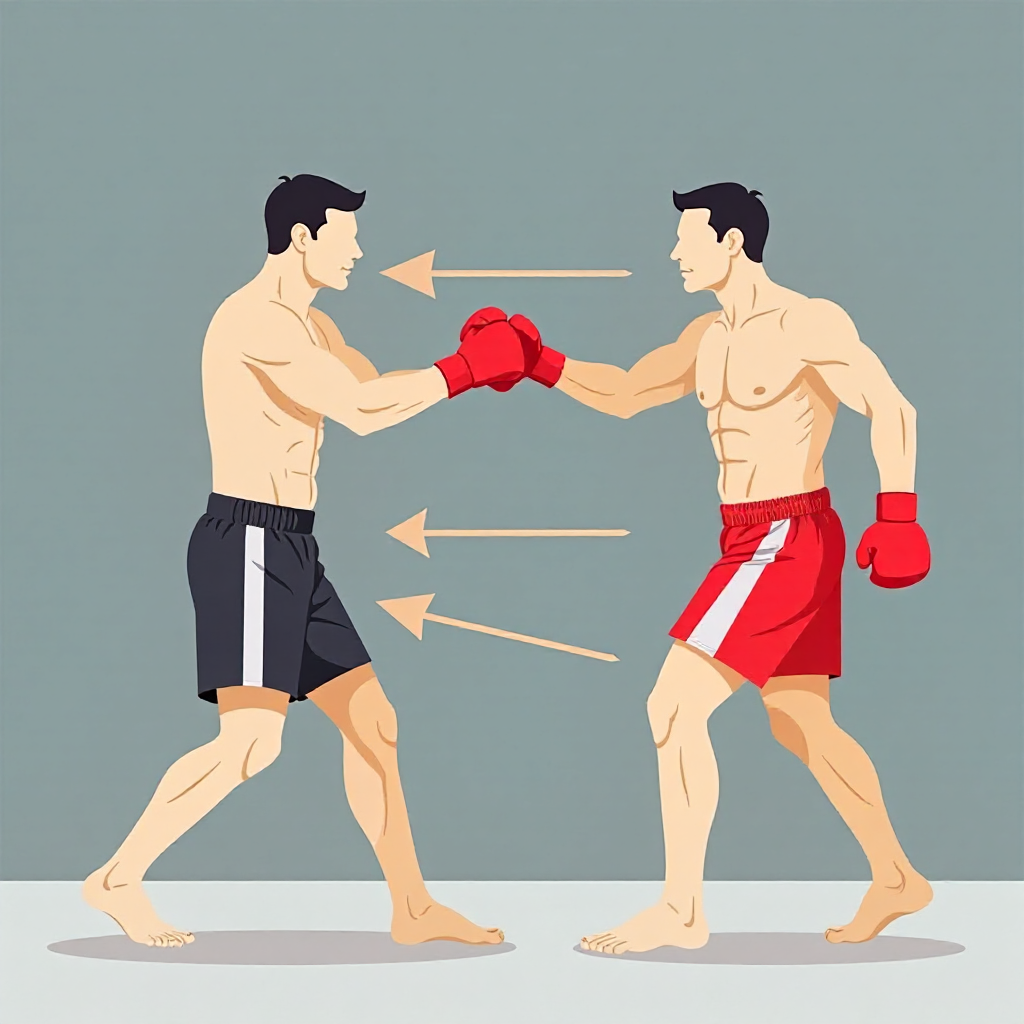
Step 1 – Build an Explosive Base with Strength Training
Compound lower-body exercises are the most direct way to build the physical foundation for punching power. Squats, deadlifts, and hip thrusts develop the leg and hip strength that feeds the kinetic chain.
The key is training for explosiveness, not just hypertrophy. A slow, grinding squat builds muscle mass; a fast, explosive squat builds the type of strength that transfers to combat sports. Here's a practical framework:
- Back squats and front squats — 3-4 sets of 4-6 reps at 75-85% of max, focusing on driving up fast
- Deadlifts — build posterior chain strength that anchors your stance and powers hip extension
- Hip thrusts — directly train the glutes responsible for hip drive in punches
- Rotational medicine ball slams — bridge the gap between gym strength and punching mechanics
Choosing compound exercises for power means accepting longer recovery times between sessions. Two heavy lower-body sessions per week is enough for most fighters — more than that competes with technical training and sparring recovery.
Upper body work matters too, but the focus should be on shoulder stability and tricep explosiveness rather than chest mass. Overhead pressing and band pull-aparts keep the shoulder healthy and able to transfer force cleanly.
Step 2 – Develop Speed and Explosiveness with Plyometrics
Plyometric training directly develops the fast-twitch muscle fibers responsible for explosive punch speed. These drills teach the nervous system to recruit muscle fibers faster — which is exactly what creates knockout power.
The most effective plyometric drills for punching power:
- Clap push-ups — train upper body explosiveness and shoulder snap
- Medicine ball chest throws — mimic the pushing mechanics of a jab or cross against a wall or with a partner
- Rotational medicine ball throws — directly replicate hip rotation under load
- Box jumps and broad jumps — develop the leg explosiveness that starts the kinetic chain
- Reactive push-ups — build the reflex speed that makes punches unpredictable
Keep plyometric sessions short and intense — 15 to 20 minutes, two to three times per week. These drills lose effectiveness when performed in a fatigued state, so place them early in training sessions, before bag work or sparring.
Step 3 – Sharpen Technique on the Heavy Bag and Pads
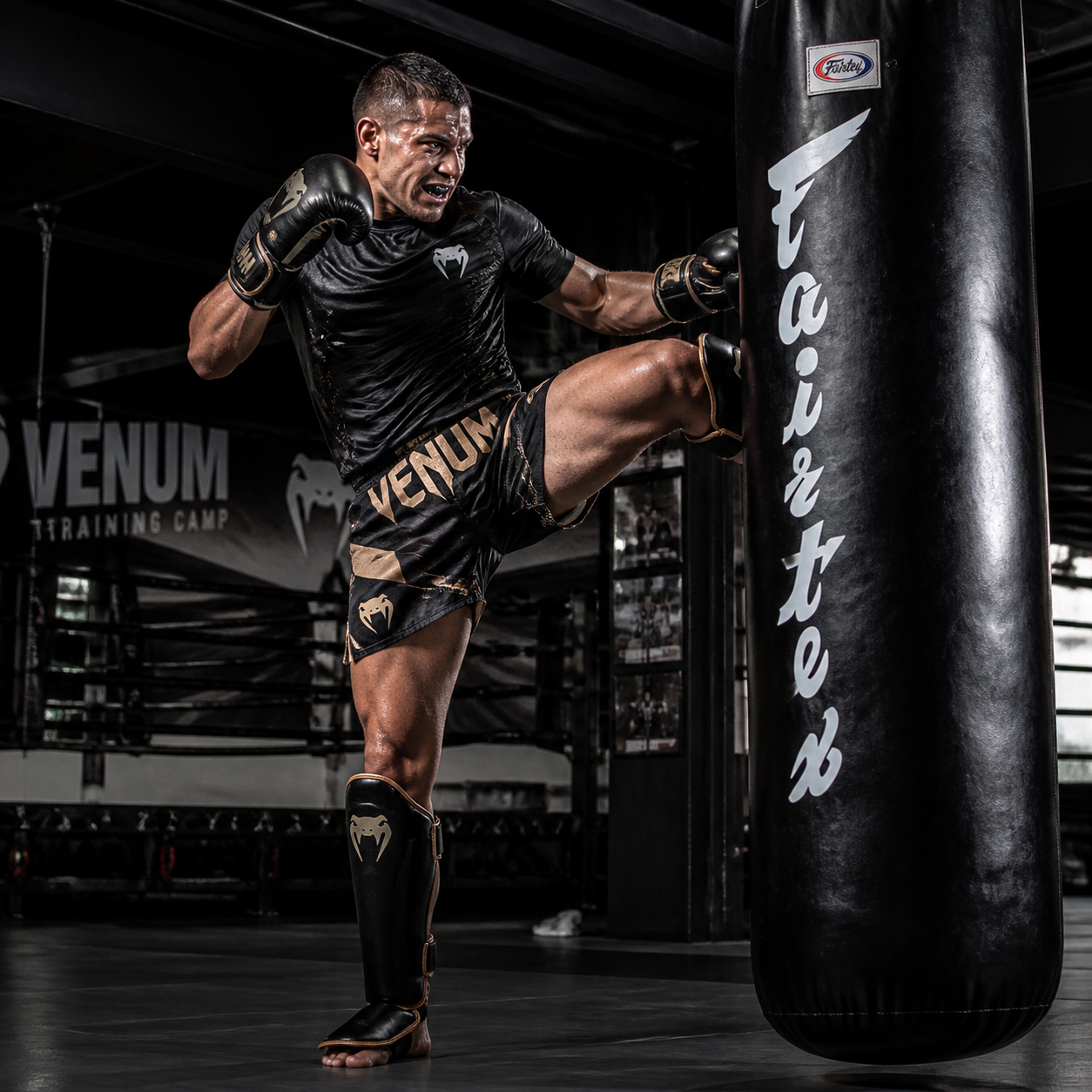
Heavy bag work is where physical training meets combat application. Done with intention, it's one of the fastest ways to increase punching power. Done mindlessly, it just builds bad habits at high intensity.
Purposeful bag work means focusing on specific mechanics during each round, not just throwing combinations until you're tired. Try structuring rounds around a single technical focus:
- Hip snap rounds — every punch must start with a visible hip rotation; no arm punches allowed
- Full extension rounds — land punches at the point of maximum reach, not pulled short
- Wrist alignment checks — proper fist formation (thumb outside, wrist straight) prevents injury and maximizes force transfer
- Power combination rounds — two or three-punch combinations with a hard finishing shot
Wrist alignment and fist formation deserve special attention. A loose or misaligned wrist collapses on impact, absorbing the force that should go into the target. Wrap your hands properly, keep the wrist rigid at the moment of contact, and land on the first two knuckles.
Pad work with a skilled partner adds the element of timing and accuracy. A good pad holder will push you to land clean shots with proper mechanics, not just swing hard.
Step 4 – Use Shadowboxing to Reinforce Power Mechanics
Shadowboxing is the most underrated tool for developing punching power. Without the feedback of a bag, fighters are forced to feel and control their own mechanics — which builds the neuromuscular patterns that carry into sparring and competition.
Two shadowboxing modes work particularly well for power development:
Slow-motion shadowboxing — throw punches at 20-30% speed, feeling every segment of the kinetic chain activate in sequence. This is essentially motor pattern programming. Ten minutes of this is worth more than an hour of mindless bag work for ingraining correct mechanics.
Speed bursts — alternate between relaxed movement and sudden, explosive three-punch combinations. The contrast between relaxed and explosive is the key. Staying tense throughout a round kills speed; learning to relax between shots and explode on contact is what separates good punchers from great ones.
Add light resistance bands around the wrists or use 1-pound hand weights occasionally to increase the training stimulus — but keep the focus on speed and mechanics, not resistance.
Common Mistakes That Are Holding Your Power Back
Most fighters have at least one of these habits limiting their punching power. Identifying and correcting them often produces immediate improvement.
Telegraphing Punches
Pulling the hand back before throwing, dropping the shoulder, or shifting weight visibly before punching warns opponents and adds wasted motion. The power in a punch comes from rotation and extension, not from a wind-up. Practice throwing from wherever your guard is, with zero preparation movement.
Arm Punching
Throwing with the arm alone — no hip rotation, no leg drive — is the most common power killer. It feels like punching, but it's missing 60-70% of available force. Every time you catch yourself doing this on the bag, stop and reset. One connected punch is worth ten arm punches.
Tensing Up Too Early
Fighters who are tense throughout their punches slow themselves down and reduce impact. Muscle tension should peak at the moment of contact, not during the travel of the punch. The phrase "relaxed until impact" is a useful mental cue. Watch elite fighters in slow motion — their arms are loose right up until the fist lands.
Ignoring Stance and Footwork
A poor stance robs you of the ground connection that starts the kinetic chain. If your feet are too close together, too wide, or your weight is on your heels, you cannot generate force from the ground. Spend time on stance and footwork fundamentals — they're boring, but they're the base everything else builds on.
Frequently Asked Questions
Does lifting weights make you punch harder?
Yes, but only when combined with technical training. Strength training builds the physical capacity for power, but that capacity only translates to harder punches when technique is sound. Lifting without drilling mechanics produces stronger arm punches, not harder punches.
How long does it take to increase punching power?
Most fighters notice measurable improvement in 6-12 weeks of focused training. Technique improvements can show results faster — sometimes within a few sessions. Building the physical attributes (strength, fast-twitch fiber development) takes longer, typically 8-16 weeks of consistent work.
Is punching power genetic or trainable?
Both. Genetics influence your ratio of fast-twitch to slow-twitch muscle fibers, which affects your natural power ceiling. But the majority of fighters are nowhere near their genetic ceiling — meaning consistent, targeted training produces significant improvement for almost everyone.
What muscles are most important for punching power?
The glutes, hip flexors, and core muscles contribute the most to punching force. The legs initiate the kinetic chain, the hips rotate and amplify it, and the core transfers it to the upper body. The shoulder and tricep finish the movement, but they're the last link, not the first.
Should beginners focus on power or technique first?
Technique, without question. Power built on poor mechanics becomes harder to correct over time, not easier. Beginners who focus on clean movement patterns, proper fist formation, and hip rotation first will develop real power faster than those who try to muscle through from day one.
Building punching power is a long game — but it's one where the steps are clear and the progress is measurable. Commit to the kinetic chain, train explosiveness deliberately, and bring intention to every round on the bag. The power follows the process.