Effective Drills to Improve Your Footwork in Kickboxing
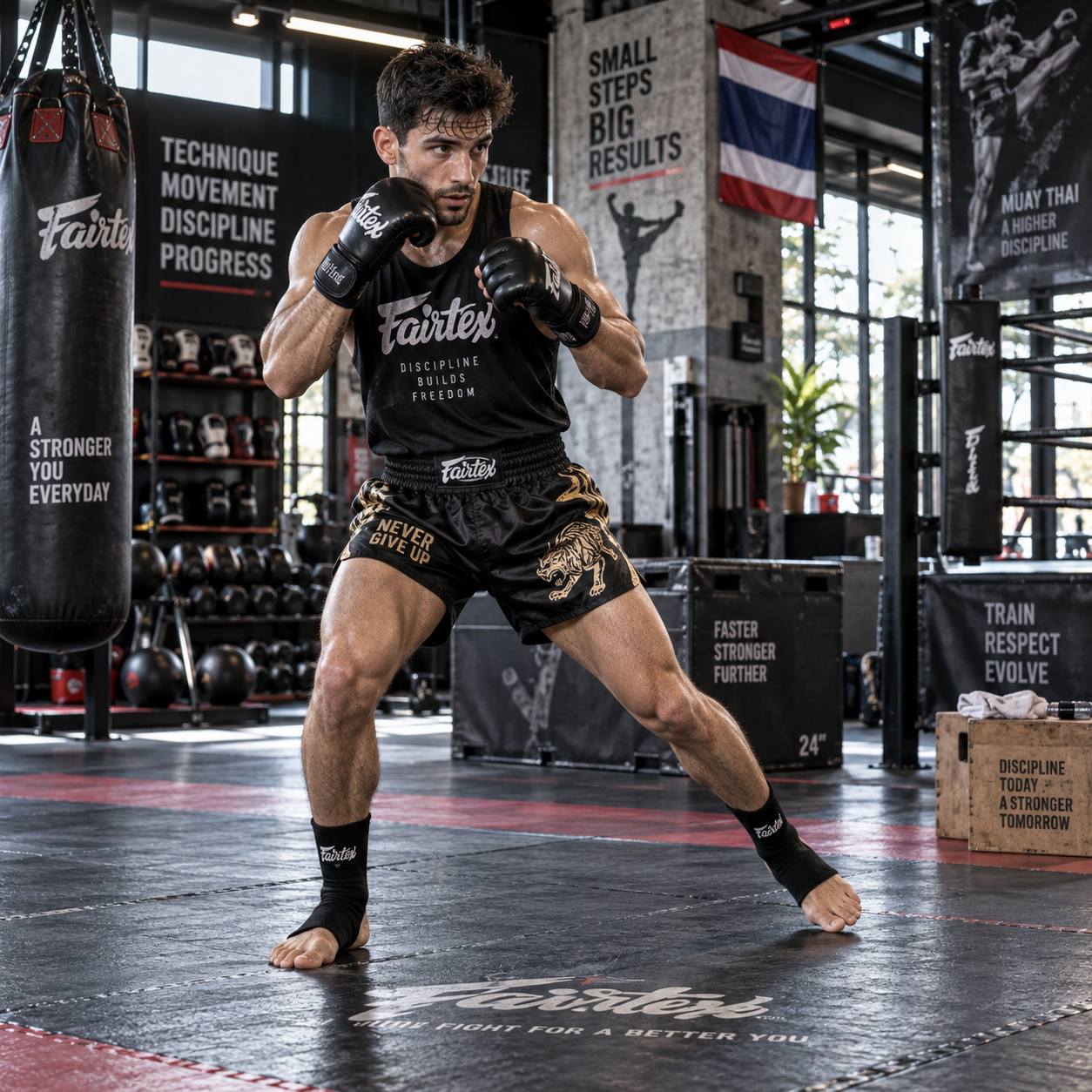
Effective kickboxing footwork helps you control distance, create attacking opportunities, defend safely, and stay balanced after every movement. The goal is not to move constantly; it is to place your feet with purpose while remaining ready to punch, kick, block, or exit.
The drills below progress from basic stance work to directional changes, combinations, and partner movement. Train slowly enough to keep your guard, posture, and balance intact. Speed should develop from accuracy rather than replace it.
Why Footwork Matters in Kickboxing
Kickboxing footwork matters because it connects every technical action: movement creates distance, distance creates timing, and timing makes attacks and defense more effective. Good footwork also improves ring positioning, allowing you to choose where exchanges happen.
A small step forward can bring a jab or low kick into range. A controlled retreat can make an opponent miss and leave them exposed. Lateral movement and pivoting help you avoid standing directly in front of an attack, while angling can place you beside an opponent’s lead shoulder or outside their strongest line.
Footwork also protects your balance. If your feet finish too close together, too far apart, or crossed, your punches lose structure and your kicks become harder to recover from. A stable base gives you the option to strike immediately or defend without a pause.
- Distance management: enter safely, maintain kicking range, or step away from pressure.
- Offensive positioning: move into range without reaching or leaning.
- Defensive movement: exit after combinations and avoid remaining on the center line.
- Ring control: guide an opponent toward the ropes while preserving your own escape routes.
Footwork Fundamentals to Master First
Footwork fundamentals begin with a balanced stance, controlled weight distribution, and feet that remain ready to move in any direction. Before adding speed or complex angles, make every step return you to a position from which you can strike or defend.
Stand with your feet approximately shoulder-width apart, with the lead foot slightly ahead and the rear foot turned out naturally. Keep your knees soft, hips available to rotate, and weight distributed so neither leg becomes heavy. Your exact stance will vary by style and coach, but your base should feel stable rather than fixed.
Use the correct stepping pattern
When moving forward, step with the lead foot first and let the rear foot follow. When moving backward, step with the rear foot first and allow the lead foot to recover. For lateral movement, step with the foot closest to the direction of travel, then bring the other foot back to stance width.
Do not let the feet click together or spread so widely that you cannot punch or kick. Keep the heels light, but avoid rising onto the toes. Your guard should remain near the face, and your eyes should stay forward rather than watching the floor.
A useful coaching cue is step, replace, ready. Every movement should end with your stance restored, shoulders relaxed, and weight available for the next action.
Solo Drills for Better Movement
To improve solo kickboxing movement, practice simple steps, pivots, and angles in short rounds while preserving stance, guard, and reset position. A mirror can provide feedback, but it should support body awareness rather than encourage you to watch yourself constantly.
1. Forward-and-back stance steps
Begin in your fighting stance with both hands raised. Step forward for two controlled steps, pause without locking your knees, then step backward to your starting point. Repeat for 30 seconds, rest for 30 seconds, and complete three rounds.
Keep the same stance width throughout. Add a jab on the first forward step and a rear straight punch on the second only after the basic pattern feels natural. The purpose is distance management, not maximum speed.
2. Lateral shuffle
Move two steps to your lead side, then two steps to your rear side. Keep your chest facing forward and avoid dragging or crossing the feet. Perform four 20-second rounds with a relaxed guard.
For beginners, reduce the distance and move beside a line on the floor. More experienced athletes can add a jab while moving one way and a low kick after resetting, provided they can finish balanced.
3. Pivot and angle step
From stance, imagine an opponent directly ahead. Step slightly outside the opponent’s lead foot, rotate on the ball of the lead foot, and bring the rear foot around until you face a new angle. Reset, then repeat in the opposite direction.
Keep the turn compact. A pivot should move you away from the center line without spinning or exposing your back. Begin with five repetitions each way, then connect the movement to a jab-cross or hook before pivoting out.
4. Shadowboxing with deliberate movement
Shadowbox for three two-minute rounds, but assign each round a footwork goal. Round one uses forward-and-back steps, round two emphasizes lateral movement, and round three adds pivots after combinations.
Throw fewer punches than usual. After every combination, ask whether you are stepping in, exiting, changing angle, or holding position for a clear reason. This turns shadowboxing into technical practice instead of aimless bouncing.
Agility and Coordination Drills
Agility drills improve quickness and coordination when they preserve kickboxing posture and directional control. Footwork ladders, cones, and floor lines are useful tools, but they should reinforce fighting movement rather than become a race.
Footwork ladder drill
Start at one end of a ladder with your hands in guard. Step both feet into the first square, then into the next, progressing forward with short, quiet steps. Walk back, rest for 30 seconds, and repeat for four passes.
Next, use an in-and-out pattern: place both feet inside a square, then step outside to the next position. Keep your hips low and finish each sequence in stance. If your feet tangle, slow down. Clean coordination has more value than a fast but unstable rhythm.
Cone and line drills
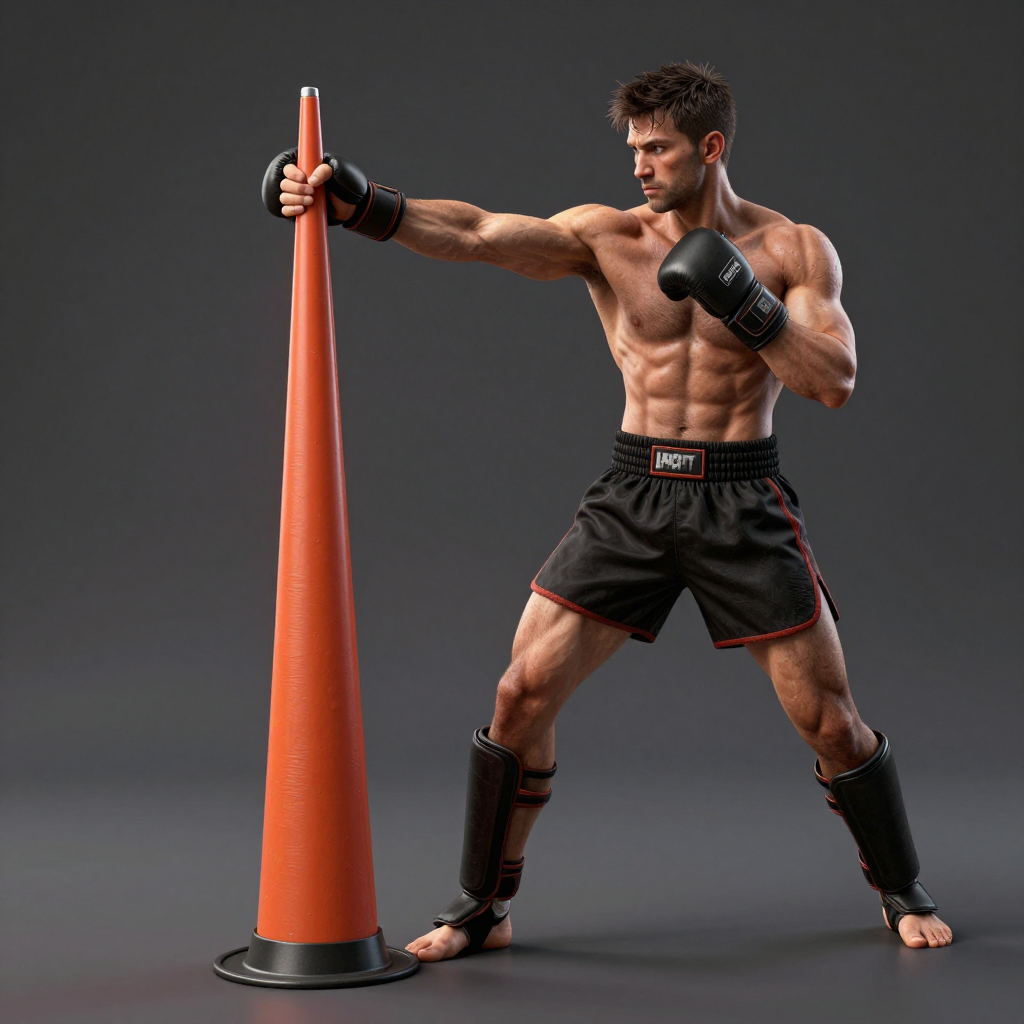
Place four cones in a square roughly two to three metres wide. Move forward to the first cone, laterally to the second, backward to the third, and laterally back to the start. Keep your torso facing the center and complete four rounds of 20 seconds.
A line drill offers a simpler option. Step across a floor line, return, then angle off at 45 degrees. Add a defensive slip or high guard only when your feet remain organized. Train on a non-slip surface with enough space to stop safely.
Partner Drills for Distance and Ring Control
Partner drills develop distance management and ring control by giving your movement a realistic reference. Keep the pace controlled, agree on the drill before starting, and use protective equipment and qualified supervision when contact is included.
Mirror drill
Face your partner at a safe range. One person leads with small forward, backward, and lateral movements while the other mirrors them without crossing the feet. Switch roles every 30 seconds for four rounds.
The follower should maintain the same distance rather than chase. The leader should avoid sudden sprints. This drill teaches visual reaction, stance recovery, and efficient movement.
Range-management drill
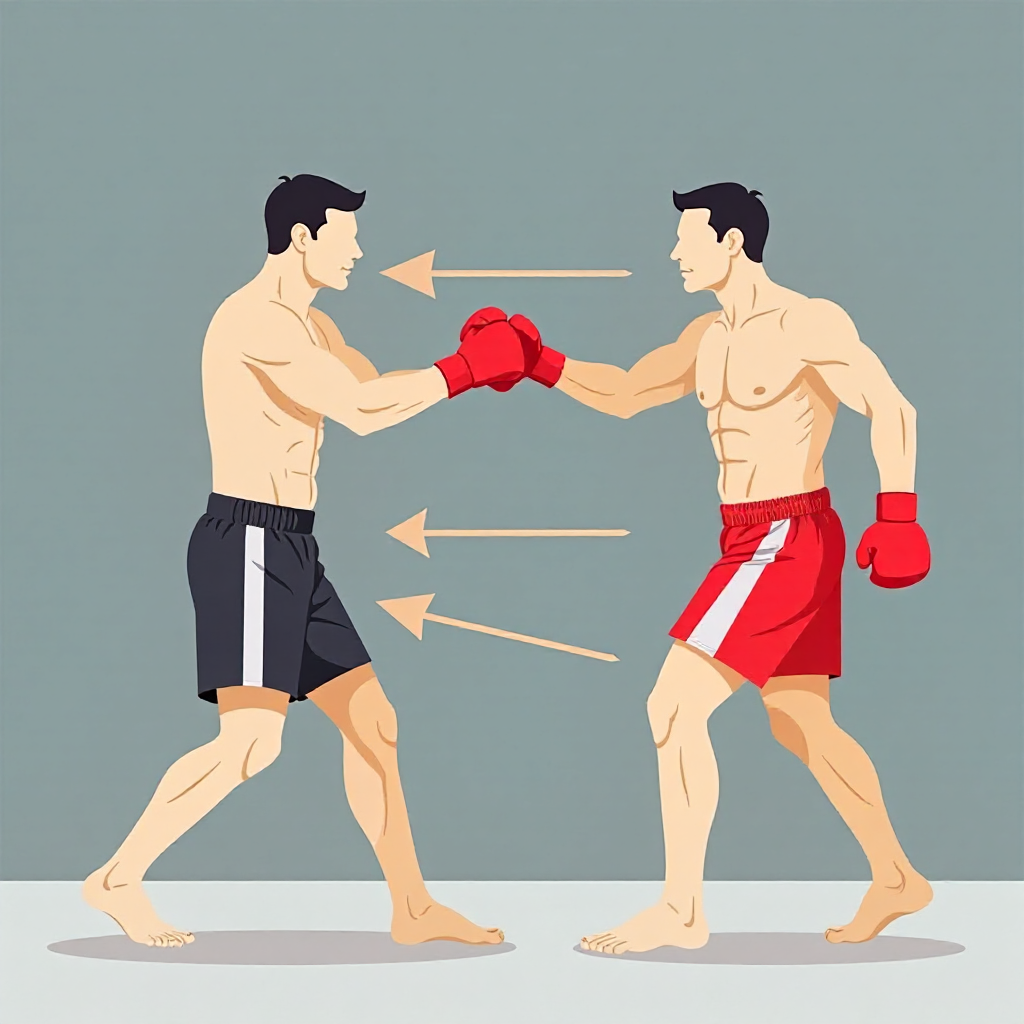
The attacker uses a light jab or front kick toward a designated target, while the defender steps just outside range and returns to stance. Start with no contact, then add light technical contact only if both athletes can remain controlled.
Focus on making the smallest useful adjustment. A large retreat may escape the strike but surrender ring space. A short step can make the attack miss while keeping you close enough to counter.
Pressure-and-retreat drill
Place a boundary behind the defending partner. The attacker advances with measured steps, and the defender circles away rather than retreating straight back. After 20 seconds, switch roles.
The defender should protect the guard and avoid getting trapped on the ropes. The attacker should cut off space with footwork instead of rushing. Stop immediately if either partner loses balance or control.
Combining Footwork With Strikes and Defense
To combine footwork with striking and defense, decide the movement before throwing the combination and finish every exchange in a stable stance. Step into range, strike with structure, then exit by retreating, angling, or pivoting.
- Step-jab and exit: step forward with the jab, recover the stance, then angle away from the center line.
- Jab-cross-pivot: throw the two punches, rotate off the lead foot, and bring the rear foot around without crossing.
- Low-kick recovery: return the kicking leg promptly, re-establish stance, and move away from the opponent’s counter range.
- Defend and reposition: after a block or high guard, take a short lateral step before preparing your response.
Practice each sequence slowly for five repetitions per side, then perform two one-minute rounds at moderate speed. The key is to avoid leaning into punches or admiring the combination. Your feet should already know where the exit is.
A practical weekly routine is two rounds of stance steps, two rounds of lateral shuffles, two rounds of shadowboxing with angles, four ladder or cone passes, and two controlled partner rounds. Add a warm-up first and stop when technique deteriorates.
Common Footwork Mistakes and How to Fix Them
The most common kickboxing footwork mistakes are crossing the feet, standing too tall, bouncing without purpose, neglecting the rear foot, and dropping the guard. Correct them by reducing speed, shortening steps, and giving every movement a technical objective.
Crossing the feet
Error: The feet overlap during lateral movement. Athletes often do this when they chase speed or try to cover too much ground.
Consequence: Balance disappears, making a punch, kick, or defensive reaction slower. Practice beside a line and use the cue step, replace until stance width stays consistent.
Standing too tall
Error: Straight knees and an upright torso make movement look relaxed but reduce control. The fix is a soft knee bend, level hips, and a quiet head position.
Bouncing without a purpose
Error: Constant bouncing consumes energy and can reveal timing. Replace it with small, deliberate weight shifts tied to an entry, exit, feint, or angle.
Neglecting the rear foot or losing the guard
Error: The lead foot moves while the rear foot stays behind, or the hands drop during a drill. This creates a stretched base and defensive openings.
Use slower repetitions and finish each movement with both feet under the hips and the guard restored. Film one round from the side if possible; video often reveals overreaching that feels normal in the moment.
Frequently Asked Questions About Kickboxing Footwork
How often should kickboxers practice footwork drills?
Practice focused footwork two to four times per week for 10 to 20 minutes, usually after warming up and before hard conditioning. Short, consistent sessions build better movement habits than occasional exhausting workouts.
What is the best footwork drill for beginners?
The forward-and-back stance step is an excellent starting drill because it teaches balance, distance control, and stance recovery. Add lateral shuffles once you can move without crossing your feet.
How can I improve lateral movement in kickboxing?
Use short lateral shuffles, cone squares, and mirror drills. Keep your torso facing the opponent, step in the direction of travel first, and finish with your stance restored.
Should I practice footwork barefoot or in training shoes?
Use the footwear required by your training surface and gym rules. Barefoot practice may improve awareness on an appropriate clean mat, while boxing or kickboxing shoes can offer traction and support; neither compensates for poor technique.
How do I use footwork while throwing combinations?
Choose a movement intention before the combination: step in, hold range, angle off, or exit. After the final punch or kick, recover your stance and move away from the opponent’s strongest counter line.