


How to Choose the Right Martial Arts School for Your Goals
Choosing a martial arts school is easier when you know what you want from training and what to look for on a visit. A good fit depends on more than the style on the sign: instructor qualifications, safety practices, class culture, schedule, and cost all matter. Whether you are drawn to kickboxing for fitness, self-defense, competition, or skill development, compare schools in person before you commit.
Define what you want from martial arts training
Start by identifying your main training goal, because the right martial arts school should match what you want to learn and how you want to train. Goals can include fitness, confidence, practical self-defense skills, competition, or steady progress in a martial art.
Write down your top one or two priorities. Kickboxing classes can offer conditioning and striking practice, but the emphasis varies: one school may focus on fitness and pad work, while another may include technical sparring or competition coaching. A broader martial arts program might offer different training methods or cover skills that are not part of kickboxing.
Consider your experience, comfort with contact, and how much time you can realistically train. If your aim is general fitness, a high-energy class may appeal to you. If you want to develop fighting skills, ask how the curriculum builds technique, defense, and controlled partner practice. No school can guarantee a particular result, and training alone does not replace sound judgment or other safety measures in real-world situations.
A useful filter: list what you need, what you prefer, and what you will not accept. For example, you might need beginner instruction and evening classes, prefer kickboxing, and rule out uncontrolled sparring. This helps you compare schools by fit rather than by reputation alone.
Find a school that matches your goals and experience
Compare the school’s programs with your goals, current experience, and preferred training style. Look for beginner-friendly classes with clear options for progressing to more advanced training if you want them.
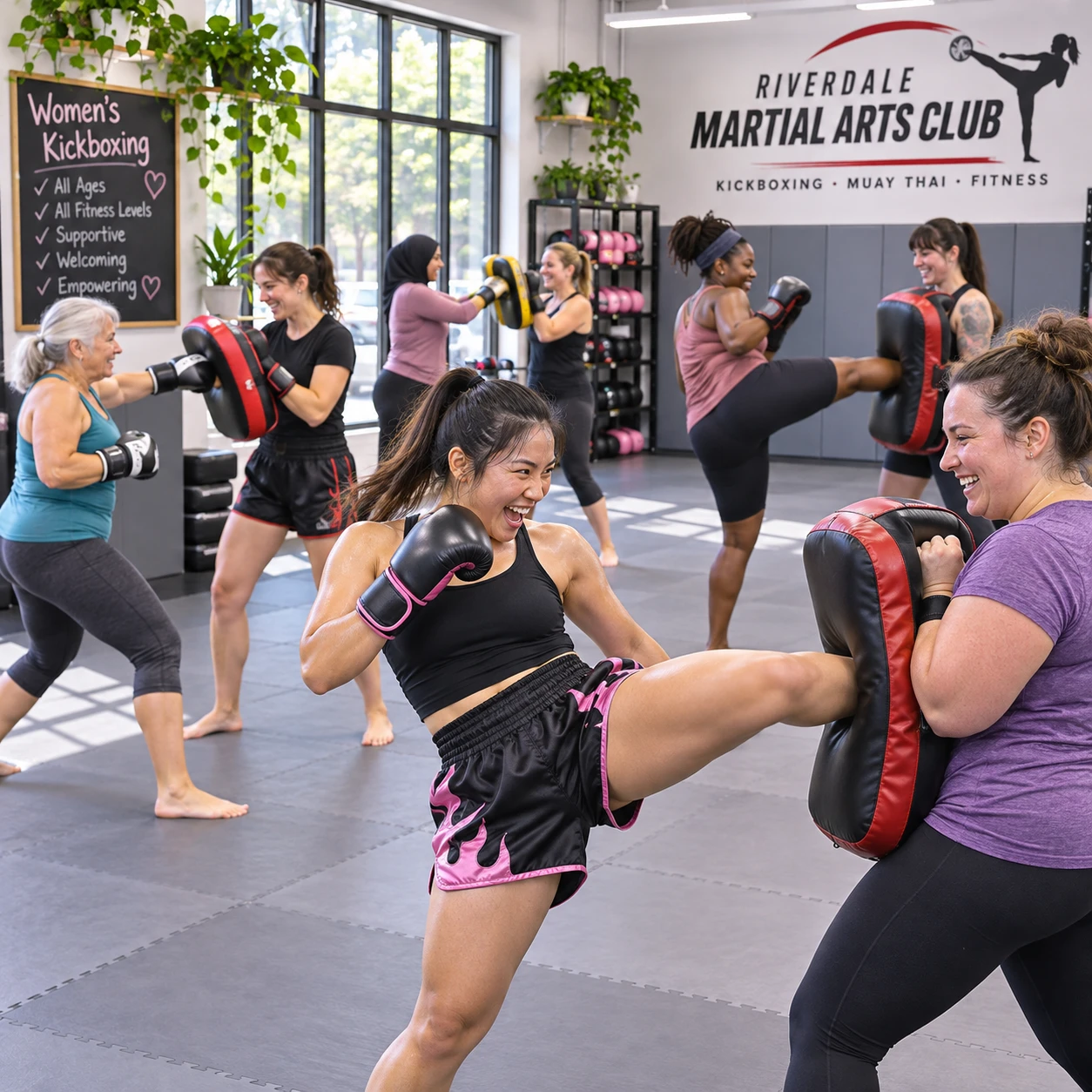
Ask what a typical kickboxing class includes. It may involve warm-ups, stance and footwork, punches and kicks, bag or pad drills, partner exercises, conditioning, and, at some schools, sparring. The balance matters: a fitness-oriented class may spend more time on continuous movement, while a technical class may break down combinations and defensive skills.
Check whether newcomers can join a beginner class or receive suitable instruction in a mixed-level session. Beginners should have time to learn basic movement and technique before being expected to keep pace with experienced students. A school that offers more than one martial art can be a good choice if you are still exploring, but variety is useful only if the classes you want are taught consistently.
Ask how students move between levels and whether sparring is optional, supervised, and introduced gradually. If you are interested in competition, check whether the school offers relevant coaching and preparation. If you are not, make sure the regular program does not assume you want to compete.
Check instructor experience and teaching style
Qualified instructors should have relevant training experience and be able to teach skills clearly, adapt to different learners, and set respectful boundaries. Credentials matter, but observe how the instructor works with students as well.
Ask about the instructor’s background in kickboxing or the specific martial art being taught, their teaching experience, and any current first-aid training. A certificate or competition record can provide context, but neither alone proves someone can teach beginners safely and effectively. Look for coaches who explain the purpose of drills, demonstrate techniques, and correct mistakes without belittling students.
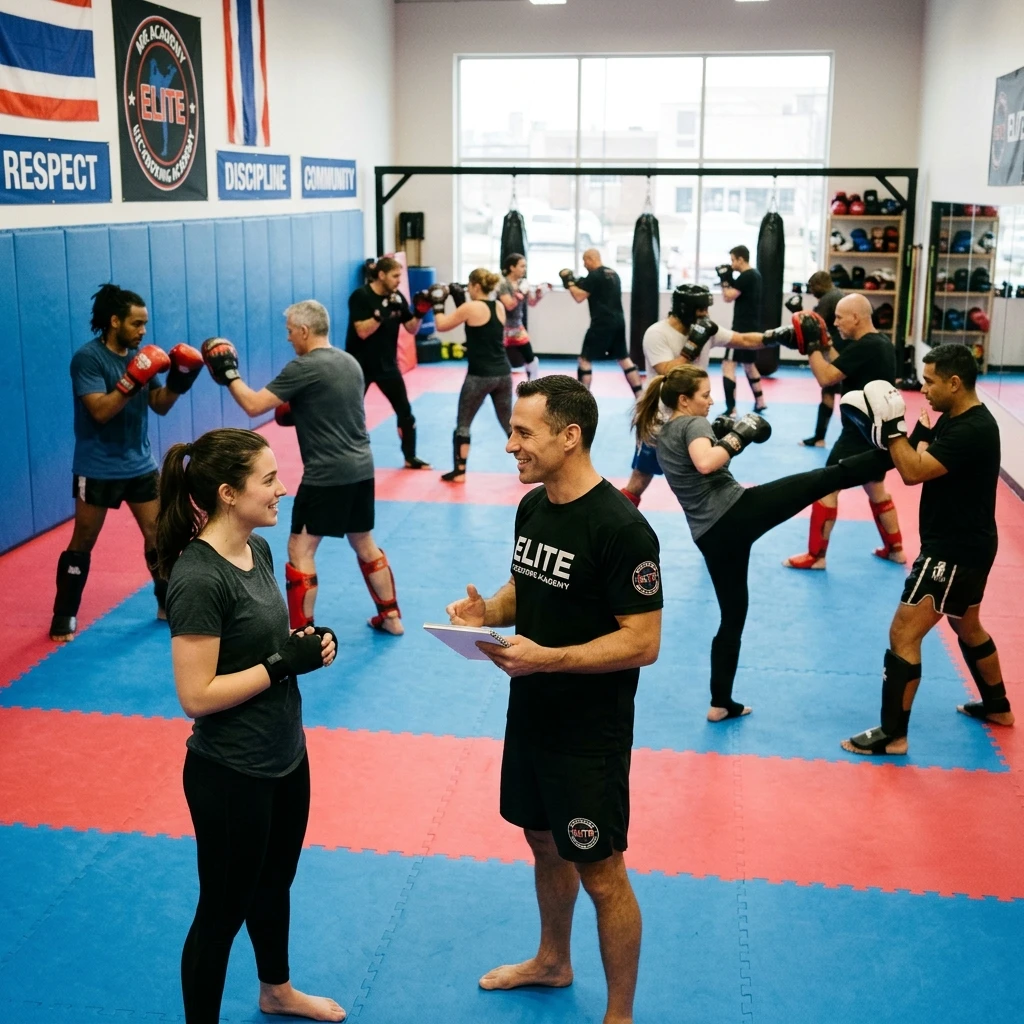
Notice whether instructions are specific and easy to follow. A helpful coach might remind a new student to return their hands to guard after a combination, then give them a chance to practice at a manageable pace. Good teaching also includes watching the room, adjusting drills when someone struggles, and offering alternatives when an exercise is unsuitable.
Respectful communication should go both ways. You should be able to ask questions about contact, injuries, or class expectations without pressure. Be cautious if an instructor dismisses safety concerns, encourages students to ignore pain, or treats aggression as proof of commitment.
Evaluate safety, facilities, and class culture
A safe martial arts school uses appropriate supervision, well-maintained equipment, clear training rules, and controlled contact. During a visit, observe the room, the class size, and how students treat one another.
Check that mats or training surfaces are clean and in good condition, bags and pads are secure, and shared equipment is maintained. Ask what protective gear is required for partner drills or sparring, how contact intensity is managed, and what happens if a student is injured. A school should explain its rules rather than leaving newcomers to guess.
Class size affects the amount of individual coaching available, though a smaller class is not automatically better. In a larger group, notice whether instructors can see the students and correct technique. In a smaller class, check that training still has enough structure and supervision for partner work.
Pay attention to the culture. Students should respect boundaries, follow coaching, and pair up without pressuring beginners into contact they are not ready for. A challenging workout can be part of good training; uncontrolled sparring and humiliation are not evidence of quality. If the environment feels dismissive or unsafe, trust that observation and keep looking.
Try a class before committing
A trial class lets you judge the coaching, pace, and atmosphere before paying for a membership. Use it to see how the school welcomes beginners and manages training, not just to decide whether the workout feels difficult.
Before you go, ask what to wear and whether you need to bring gloves or other equipment. Arrive early enough to introduce yourself, mention any relevant injuries or limitations, and learn the class rules. During the session, notice whether the warm-up prepares you for the drills and whether the instructor explains techniques before asking students to perform them.
Watch how the coach balances the room. Do newcomers receive guidance? Are combinations demonstrated at a speed that students can follow? If partner work or sparring takes place, is it controlled and supervised? A good first class may still feel demanding, but you should understand what you are doing and feel able to ask for a modification or pause.
Afterward, ask how the program progresses, what classes suit beginners, and whether the trial creates any obligation. Compare your impressions with your original goals. A school can be welcoming yet not offer the training you want, so consider both the experience and the actual curriculum.
Compare schedule, costs, and commitment
Choose a school whose schedule, membership fees, and commitment terms fit your real routine and budget. Include required equipment and extra charges when comparing the total cost.
Review the weekly timetable and check whether the classes you want run at times you can attend regularly. Ask about missed classes, make-up sessions, holidays, and how often the schedule changes. A convenient location and reliable class times can matter more over time than an impressive list of occasional workshops.
Request a clear breakdown of costs. Depending on the school, expenses may include registration, monthly or annual membership, gloves, hand wraps, shin guards, uniforms, grading, or competition fees. Ask about minimum terms, cancellation rules, and any introductory offer that changes price after a trial period. Get the details in writing if anything is unclear.
There is a trade-off between flexibility and commitment: a month-to-month plan may cost more per month, while a longer agreement may reduce the rate but make it harder to leave. Do not choose a plan based on an ideal training schedule you are unlikely to maintain. Start with a realistic number of sessions and reassess once you know how the classes fit your life.
Frequently asked questions
These quick answers cover common questions people ask before choosing a kickboxing or martial arts school. Use them alongside an in-person visit and direct questions to the instructor.
What should a beginner look for in a kickboxing school?
Look for clear beginner instruction, patient coaching, controlled partner drills, and a progression that teaches stance, footwork, basic strikes, and defense. Ask whether sparring is optional and how the school prepares students before introducing it.
What should I bring to a trial class?
Bring comfortable workout clothes, water, and any equipment the school asks you to use. Many schools provide loaner gloves or pads, but confirm in advance. If you have wraps or gloves already, ask whether they are suitable for the class.
How can I tell if a martial arts class is safe?
Look for active supervision, clear rules, sound equipment, appropriate protective gear, and students who control their contact. The instructor should welcome questions and respond sensibly to pain, injury, or discomfort.
Should I choose a school based on competition opportunities?
Choose competition as a factor only if competing is one of your goals. Ask about coaching, preparation, and how participation is decided. If you prefer recreational training, confirm that you can progress without being pushed toward events.
The right martial arts school is the one that supports your goals, teaches responsibly, and fits your daily life. Visit more than one if possible, take a trial class, and compare the details before signing up.