



Bareboat Yacht Charter in Sardinia 2026: A US Traveler's Guide to Sailing the Costa Smeralda Without a Captain
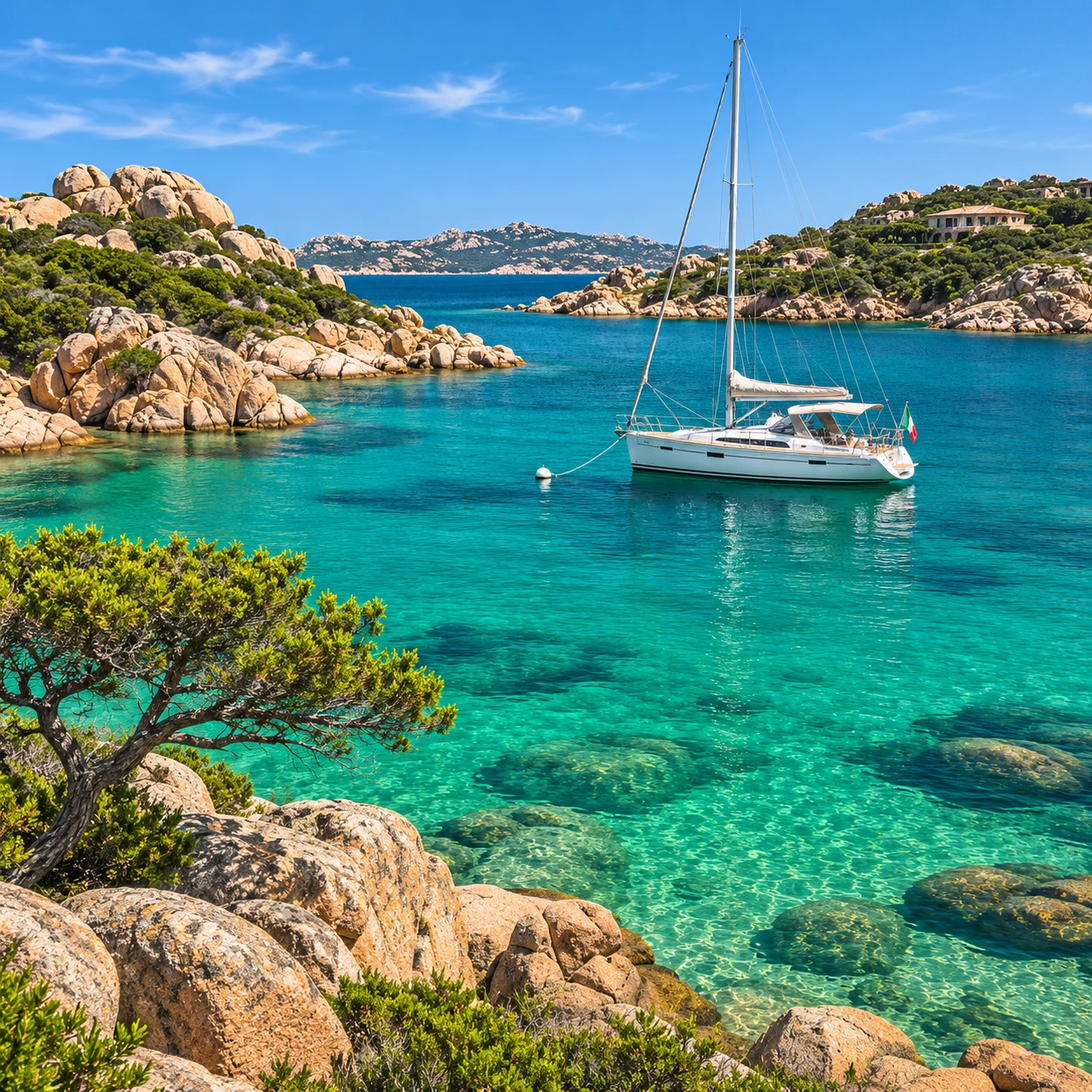
I still remember rounding that granite shoulder north of Porto Cervo the first time and watching the water change color. Deep navy one minute. Then a green so bright it looked lit from underneath. That was on a bareboat — no captain aboard, just me and three friends who'd spent the entire previous winter arguing about provisioning lists. If you're an American sailor with a few charter weeks behind you, Sardinia in 2026 deserves a hard look. The Costa Smeralda and the Maddalena archipelago pack some of the best short-hop sailing in the Mediterranean into a stretch of coast you can cover comfortably in a week.
An unskippered charter changes the whole trip. You leave when the wind says so, not when the schedule does. You swim off the transom at 7 a.m. in a cove with no name on the chart, and you eat dinner ashore at 10 p.m. because nobody's waiting on you. What follows is what American charterers actually need: the licensing paperwork, real 2026 budgets, routes that work, and how to book without getting burned.
Why US Sailors Are Choosing Bareboat Charters in Sardinia for 2026
Three things are pulling Americans toward Sardinia right now. First, geography. The water between Porto Cervo and La Maddalena is a maze of granite islands, shallow turquoise passes, and anchorages that feel engineered. Second, value — a July bareboat week out of Olbia often prices below comparable Caribbean high-season rates, and you're sailing the Mediterranean, not the trades. Third, access. Delta and ITA routes through Rome put you in Olbia with one connection, and the charter bases sit ten minutes from the airport.
Shoulder season matters more than people expect. Late May, June, and September give you warm water, reliable breeze, and marina berths you can actually get. August is crowded and expensive. I'd skip it unless your dates are locked.
Bareboat vs. Crewed — What You Actually Gain
On a crewed 45-footer you're paying for a captain and often a hostess, which can add 40–60% to the base rate. Split across six people, that's real money. Bareboat also buys you privacy and control — no dinner-hour negotiations, no itinerary set by someone else's preference for marinas.
But be honest about your crew. If nobody aboard has skippered a 40-foot yacht in tidal or Med-mooring conditions, hire a skipper for the first two days. Costs a few hundred euros a day and buys you a guided introduction to bow-to mooring and park anchoring rules. Cheap insurance, that.
Licensing and Certification Rules for US Charterers
This is where most American bookings stall, so let me be blunt. Italian charter operators want proof of competence, and the standard they accept is the ICC — the International Certificate of Competence. Italy doesn't issue the ICC to non-residents, but it recognizes it. And US credentials can get you one.
What actually satisfies a Sardinian base in 2026:
- US Sailing Bareboat Cruising certification — widely accepted, especially paired with a logged résumé.
- ASA 104 (Bareboat Cruising) with 101 and 103 behind it — the most common American path.
- The ICC route — US Sailing and US Powerboating issue ICCs to members who complete the required coursework and assessment. Cleanest document to carry.
You'll also be asked for a VHF/SRC radio certificate (or proof of equivalent training), a sailing résumé listing logged miles, boat sizes, and cruising areas, and a signed security deposit authorization. The base handles the Italian libretto — the boat's registration document — plus any cruising permit formalities. That's their job, not yours. Bring the paperwork in one folder, translated where needed.
What to Do If You Don't Hold an ICC Yet
Work backward from your summer charter. Log the sea time first — charter operators typically want 200+ miles and prior bareboat experience — then complete ASA 104 or US Sailing Bareboat Cruising, then apply for the ICC through US Sailing. Allow six to ten weeks for issuance. Carry the certificate plus a photocopy, and keep a digital scan in your email. Start in January for a July booking and you'll have room to spare.
What a Bareboat Charter in Sardinia Really Costs in 2026
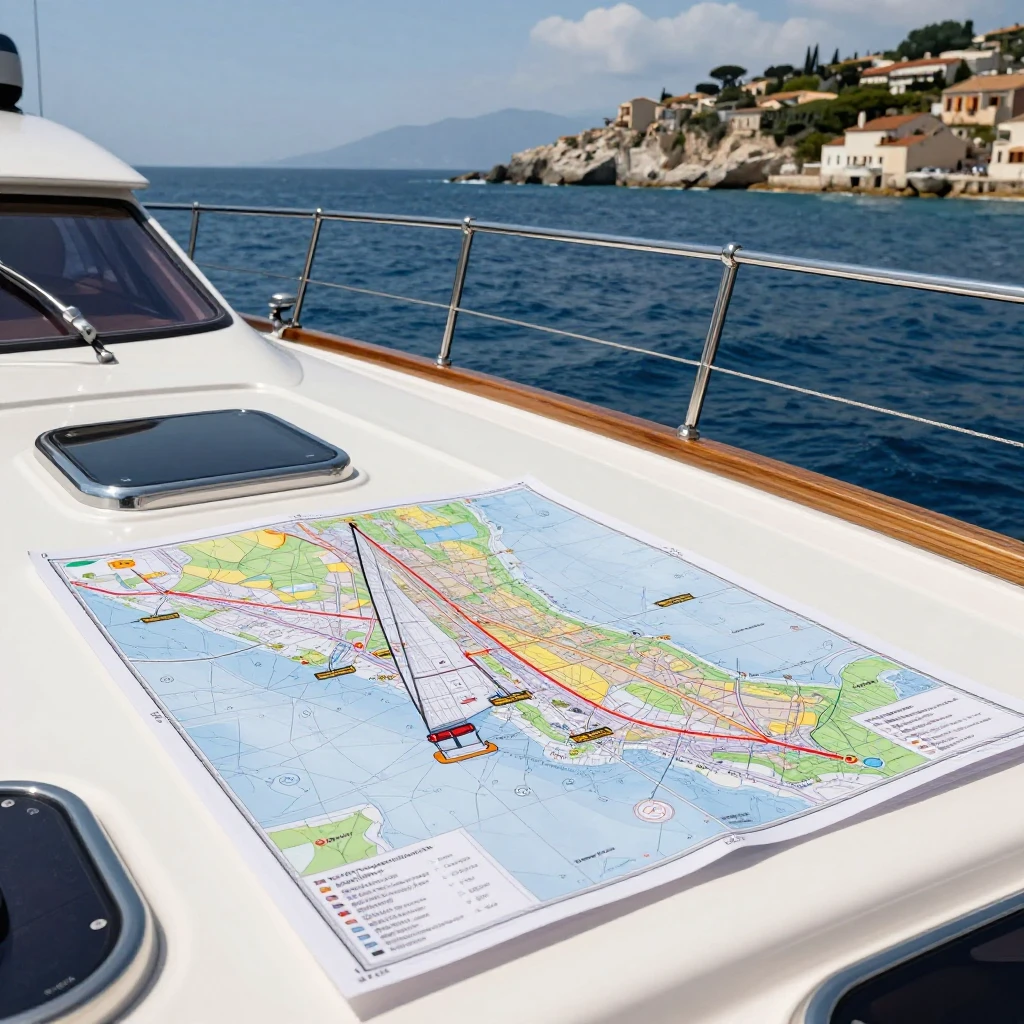
Headline rates mislead. Here's how the budget actually breaks down.
Base rate, high season (July–August): a 40–45 ft monohull runs roughly €4,500–7,000 per week; a 40–45 ft catamaran €7,500–12,000. Shoulder season (June, September): expect 25–35% less. May and October drop further — the tradeoff being cooler water and less certain weather.
Then come the extras that surprise first-timers. End cleaning (€150–250), outboard fuel and dinghy use, towel and linen packs (€15–25 per person), transit log (€100–200), and marina fees. Porto Cervo is the painful one — often €120–200 a night for a 45-footer in peak season. Fuel for a typical 120-nautical-mile week with modest motoring: €150–250. Provisioning for six, eating aboard most nights with two dinners ashore: €500–800.
Realistic all-in for six people on a monohull in June: roughly €6,500–8,500 total, or €1,100–1,400 per person. A July catamaran pushes that to €1,800–2,300 per person.
Hidden Line Items and How to Read a Charter Contract
Read for these specific clauses. Deposit insurance vs. cash deposit: insurance costs a few hundred euros and caps your liability; a cash hold ties up €2,000–4,000 on your card for weeks. Damage waiver is separate from insurance and often excludes the dinghy and outboard. Late-return penalties can equal a full day's rate. Cancellation terms — know whether your deposit refunds at 60 days or zero days. And confirm whether a one-day skipper add-on includes their food and cabin.
Where to Book — Choosing a Reputable Charter Provider
There's a difference between an operator and a broker. Operators own or manage the fleet. Brokers resell inventory and vanish when something goes wrong at the dock. So ask for fleet age (under eight years is comfortable), maintenance records, base location relative to Olbia airport, and whether the briefing is in English. Confirm 24/7 phone support with a real human on the other end.
When you're comparing options, line up fleet, base, and bareboat terms side by side instead of reading marketing pages in isolation. Sailors planning a Costa Smeralda trip can review https://sardinialuxyachts.com/en/services/bareboat-yacht-charter/ as a benchmark for what a well-run local operator publishes — hull inventory, deposit structure, included extras — then hold other quotes against it.
Booking Timeline for a 2026 Season Charter
For July or August, reserve six to nine months ahead. That means January or February 2026. June and September: four to six months out. Expect a 30–50% deposit at signing, balance due 30–45 days before embarkation. Get written confirmation that the specific hull is held in your name, with the contract reference, before you book flights. I've watched people lose airfare because they read 'availability confirmed' as a signed contract.
Best Bareboat Routes from the Costa Smeralda
The northern loop — Porto Cervo to Caprera, La Maddalena, Spargi, and Budelli — is the classic. Short hops of 10–18 nautical miles, protected water, anchorages that hold well in a mistral. The Maddalena park charges a permit fee and restricts anchoring in Posidonia seagrass, so use the designated sandy patches or park moorings.
The southern run toward Tavolara, Molara, and San Teodoro suits a crew that wants fewer boats around. Distances of 20–30 miles, more exposed swell from the southeast, and dining ashore at San Teodoro that's worth planning a night around.
Bonifacio, across the Strait in Corsica, is the ambitious option — 35–45 miles each way, and it wants a solid weather window plus real confidence in the mistral forecast. The payoff is the most dramatic harbor entrance in the Mediterranean.
A Sample Seven-Day Itinerary
- Day 1: Board at Olbia, checkout sail, short hop to Porto Cervo (12 nm). Provision at the base supermarket before you leave.
- Day 2: Porto Cervo to Caprera (14 nm). Anchor off Cala Coticcio; water and fuel at La Maddalena town.
- Day 3: La Maddalena to Spargi and Budelli (8 nm). Swim, lunch at anchor, dinner aboard.
- Day 4: Budelli to Santa Teresa di Gallura (16 nm). Marina night, dinner ashore.
- Day 5: Santa Teresa to Tavolara (22 nm). Anchor under the limestone massif; restaurant on the beach.
- Day 6: Tavolara to San Teodoro (10 nm). Easy day, laundry and reprovision.
- Day 7: San Teodoro back to Olbia (18 nm). Return by 5 p.m. for the checkout inspection.
Note that day-7 deadline. Italian bases inspect thoroughly and charge for anything unreported.
Navigation, Weather, and Safety Notes for American Skippers
Mediterranean mooring is bow-to or stern-to, anchor laid ahead, lines to the quay. Practice it on the checkout sail — you will do it under pressure in Porto Cervo. The mistral comes from the northwest, usually with a day or two of warning, and blows hard through the Strait of Bonifacio. Read the forecasts every morning. Scirocco from the southeast drags haze and swell into anchorages that are normally flat calm.
VHF follows Italian conventions: channel 9 for marina calls, 16 for distress and initial contact. Carry the boat's registration and your certification on board — the Guardia Costiera does board and check. Use the tender only where permitted, and respect the swimming buoy lines.
Common Mistakes First-Time Bareboaters Make in Sardinia
- Underestimating ICC paperwork. Fix: start the certification process four months before your charter date.
- Booking flights before the boat is confirmed. Fix: get the signed contract and hull name first.
- Over-scheduling distance. Fix: cap daily runs at 20 miles unless the whole crew is experienced.
- Leaving provisioning to arrival day. Fix: pre-order with the base or shop the morning you board.
- Assuming marina space. Fix: call ahead for Porto Cervo and Santa Teresa in July and August.
Frequently Asked Questions
Can a US citizen legally captain a bareboat in Italy? Yes, with accepted proof of competence — an ICC, or US Sailing/ASA certification plus a logged résumé the operator approves.
Do I need a license if I only motor? Yes. The requirement applies to the vessel, not the propulsion. Powerboat credentials work if the base approves them for the hull type.
Is a catamaran easier for a family crew? Generally yes — no heeling, more space, easier anchoring. It costs more and sails less crisply upwind.
What's the deposit and when is it released? Typically €2,000–4,000 held on a credit card, released within 7–14 days after return, minus any damage assessed at checkout.
Can I hire a skipper for the first day only? Yes, and many bases encourage it. Expect €250–350 per day plus food.
Is provisioning included? No. Some bases offer a pre-order service; the cost is yours.
Final Thoughts — Sailing Sardinia on Your Own Terms
Four decisions determine whether your 2026 charter works. Your certification is in order, your budget accounts for the extras, your route matches your crew's real appetite for miles, and your operator is a company you vetted rather than a listing you clicked. Get those right and the rest is weather and luck. The Costa Smeralda is generous with both.
Inventory for peak weeks is already thinning. If you want a specific hull in June or September, move now. The water will still be that impossible green when you get there.